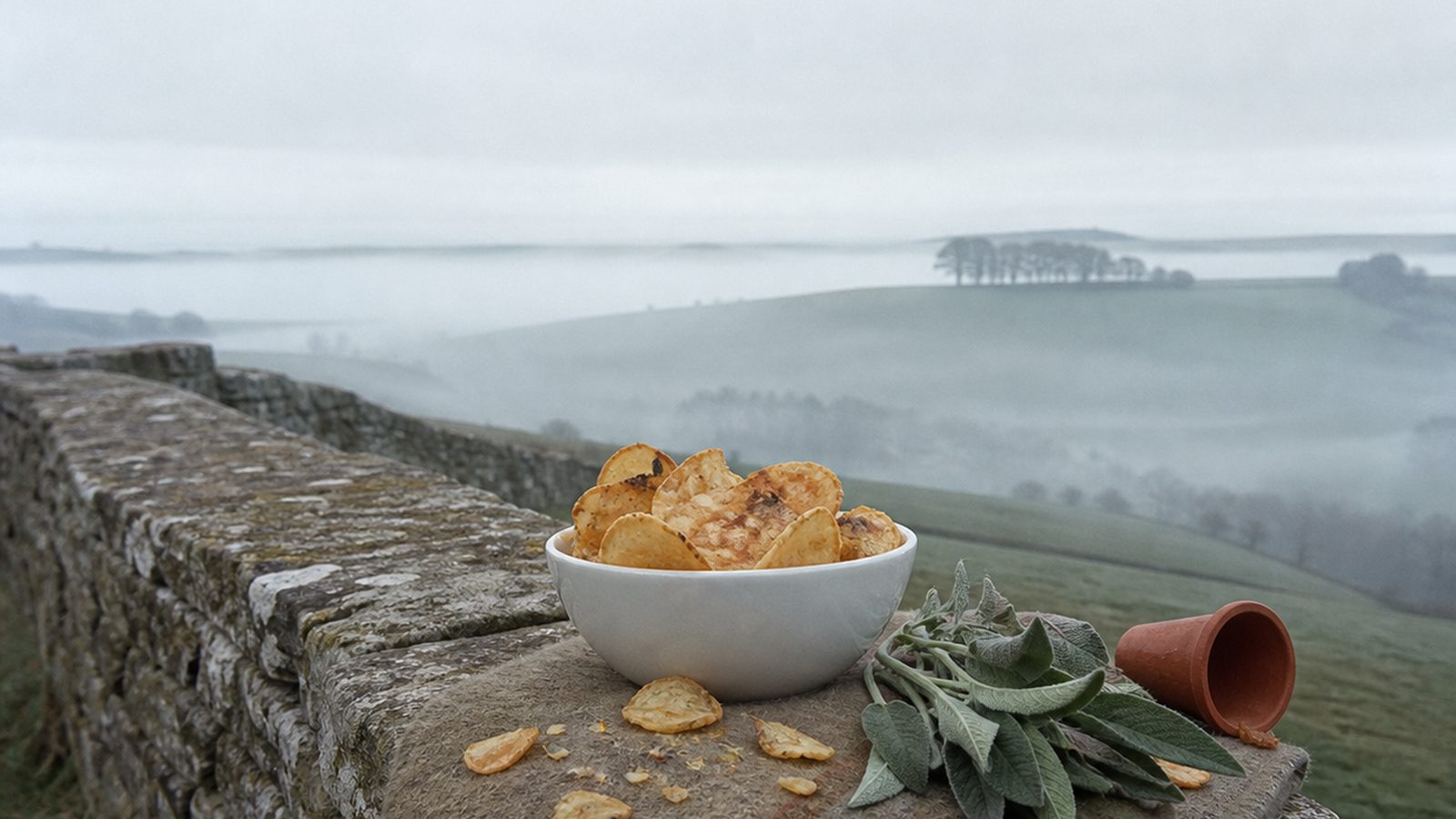
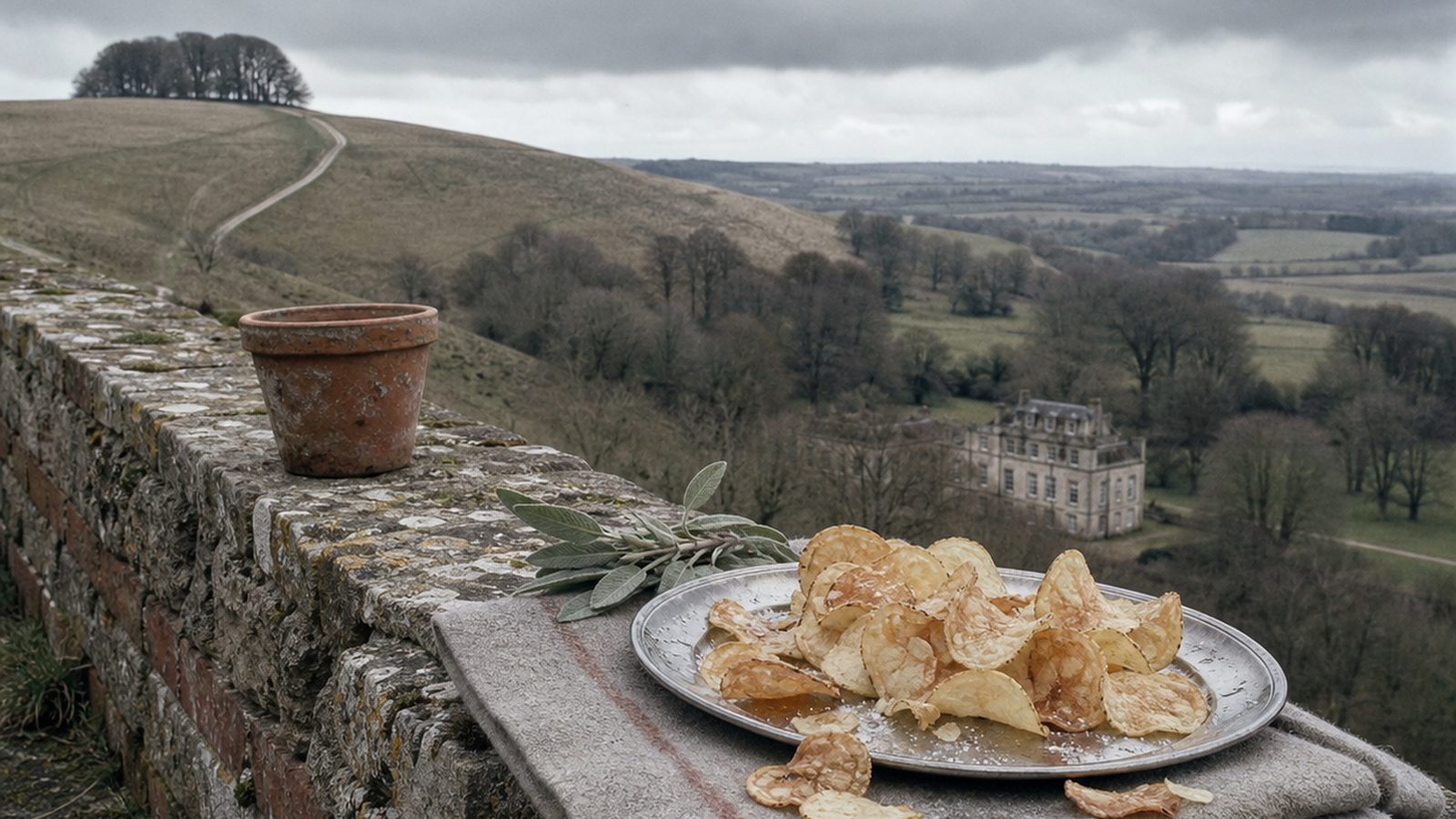
What produced it: two prompts
No orchestration script written by hand. No spec document. Typed on a phone.
1 · the build, copy and research
run a dynamic workflow, spin up as many subagents as you need.
build a proper brand site for posh crisps, upmarket british hand
cooked crisps. each flavour gets its own page tied to a real english
county and its actual food history. researched properly, i want
people to feel like they're learning something, elevated like wine
or coffee, not a snack. make it feel like it was produced by a high
quality production studio like The Mill. absolutely world class.
2 · every image on the site
give me a version with photorealistic AI images for a consistent
visual identity. dynamic workflow: researchers find source photos as
reference (don't filter for copyright, they're reference only), three
agents generate, a grader agent picks the best on accuracy, no AI
artifacts and fit for brand identity, and acts as QC including
rejecting and repeating the cycle. final agent reviews images against
the corpus of approved images to create a cohesive visual language
across the site. scroll journeys should always end with a next button.
use my existing codex subscription for the image generation, i don't
want to sign up for another image api
Describe the shape, not the steps.“Three generate, one grades, it can reject and repeat” is an architecture. It became a pipeline over 19 slots, each with a three-way fan-out into a schema-bound grader with a retry loop. You specify the topology; the model writes the control flow.
Set a bar, not a style guide.“Like a high quality production studio” is the entire art direction input. The 2,000-word visual bible that made 50 images look like one campaign was written by an agent from that phrase.
One clause can unblock a whole stage.“Don’t filter for copyright, they’re reference only” is what let the researchers fetch anything as accuracy conditioning. Without it they would have stalled on licensing for images nobody publishes.
Specify no numbers.Nobody asked for 19 slots, 57 candidates or 8 counties. Those fell out of the brief. Precision about structure pays; precision about content is what the agents are for.
Name the constraint, not the workaround.“Use my existing subscription, I don’t want another API” is a constraint. The agent worked out what the tooling on the machine could already do, then wrote a small CLI around it — retries, rate-limit backoff, token refresh, and a deterministic crop to the exact output size. Every one of the 57 generations then shelled out to that one command.
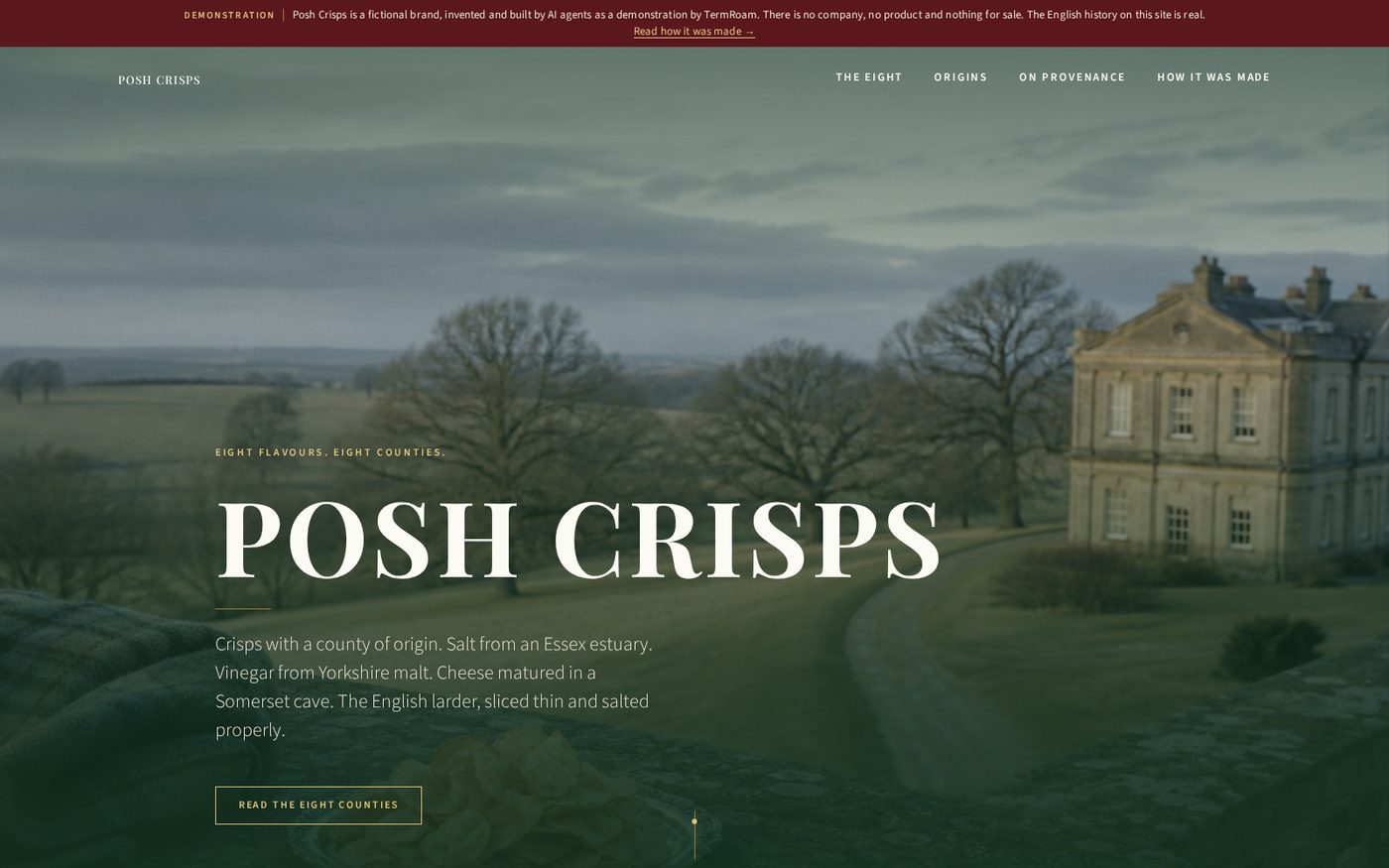 Posh Crisps
Eight flavours, each tied to a real English county and its documented food history. Interactive origin map. Every photograph generated, every fact checked by a separate agent. A fictional brand, built to prove the method.
Open the demo →
Posh Crisps
Eight flavours, each tied to a real English county and its documented food history. Interactive origin map. Every photograph generated, every fact checked by a separate agent. A fictional brand, built to prove the method.
Open the demo →