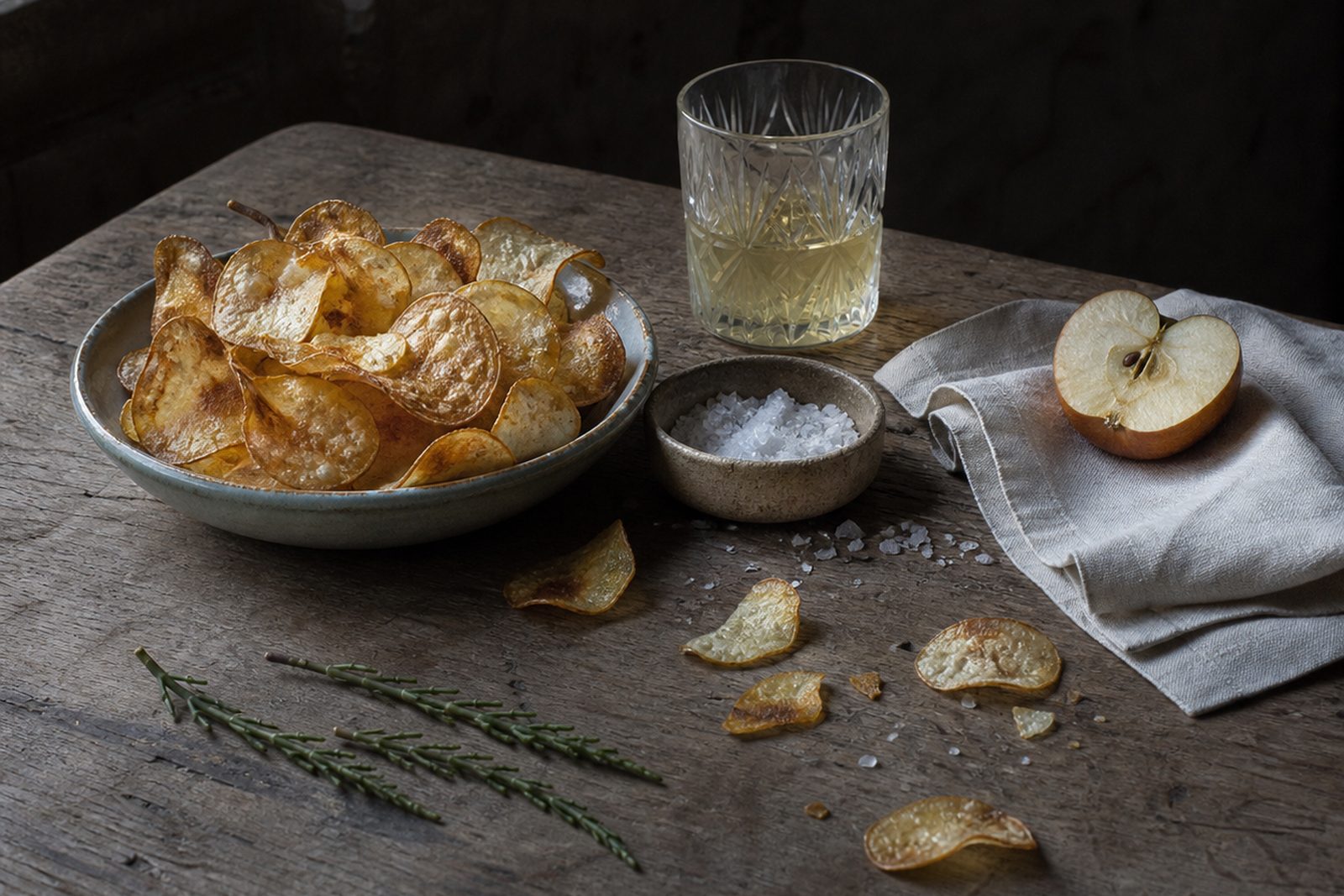
 Maldon, Essex
Sea Salt & Cider Vinegar
Salt drawn from the Blackwater since the Iron Age, in crystals that grow as small hollow pyramids.
Maldon, Essex
Sea Salt & Cider Vinegar
Salt drawn from the Blackwater since the Iron Age, in crystals that grow as small hollow pyramids.
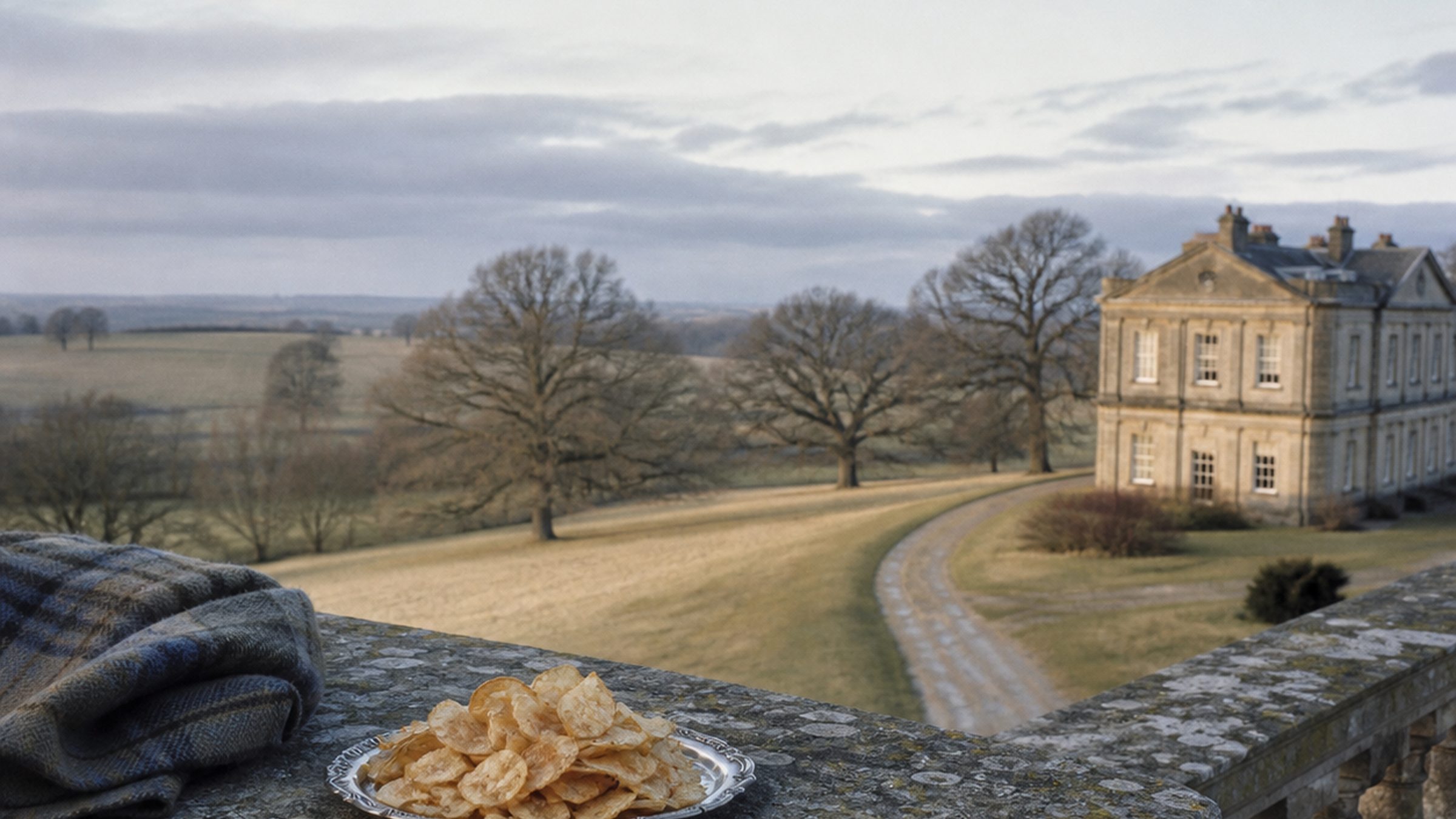
Eight flavours. Eight counties.
Posh Crisps
Crisps with a county of origin. Salt from an Essex estuary. Vinegar from Yorkshire malt. Cheese matured in a Somerset cave. The English larder, sliced thin and salted properly.
I
On the matter of provenance
Why a crisp deserves a county
Wine has its appellations. Cheese has its caves. Crisps have a barcode and a lorry.
This seems to us an oversight.
Salt is a place. It is a particular estuary, a particular set of pans, a particular crystal that grows as a hollow pyramid and nowhere else quite the same. Vinegar is a place. Mustard is a place — a yellow field outside Norwich in May. These things were made somewhere, by someone, for a reason, and more often than not the reason is written down in a parish record or a Pipe Roll.
So we did the obvious thing. We gave every flavour a county.
Not a marketing county. A real one, with a history that can be looked up: salt panned on the Blackwater since the Iron Age, cheese bought for Henry II by the ton in 1170 at a farthing a pound, Stilton sold to coach passengers on the Great North Road, a sauce put on sale in Worcester in 1837.
The crisp is thin. The provenance need not be.
Eight counties. Eight histories. Set down plainly.
The Eight
Each flavour is anchored to one English place and to the food history that actually happened there — the salt pans, the maltings, the caves, the mustard fields, the droving roads, the coaching inns, the barrels, the orchards. The history is real and can be checked. It is set out in full on each flavour's page, with the dates left in.
-
Maldon, Essex
Sea Salt & Cider Vinegar
Salt drawn from the Blackwater since the Iron Age, in crystals that grow as small hollow pyramids.
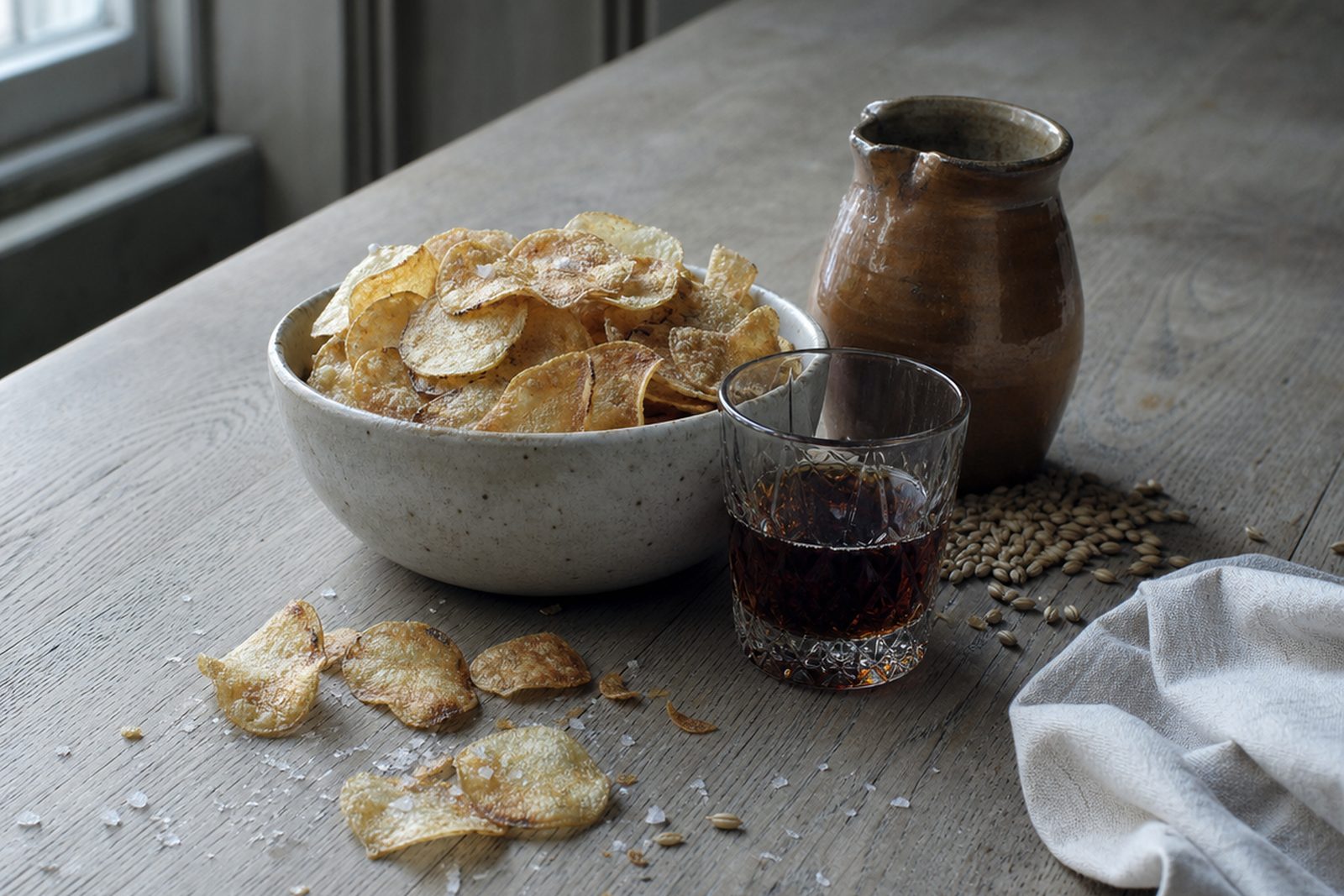 Yorkshire
Malt Vinegar & Sea Salt
Barley malted for the brewers, soured into vinegar, and poured over the fish supper that fed the industrial North.
Yorkshire
Malt Vinegar & Sea Salt
Barley malted for the brewers, soured into vinegar, and poured over the fish supper that fed the industrial North.
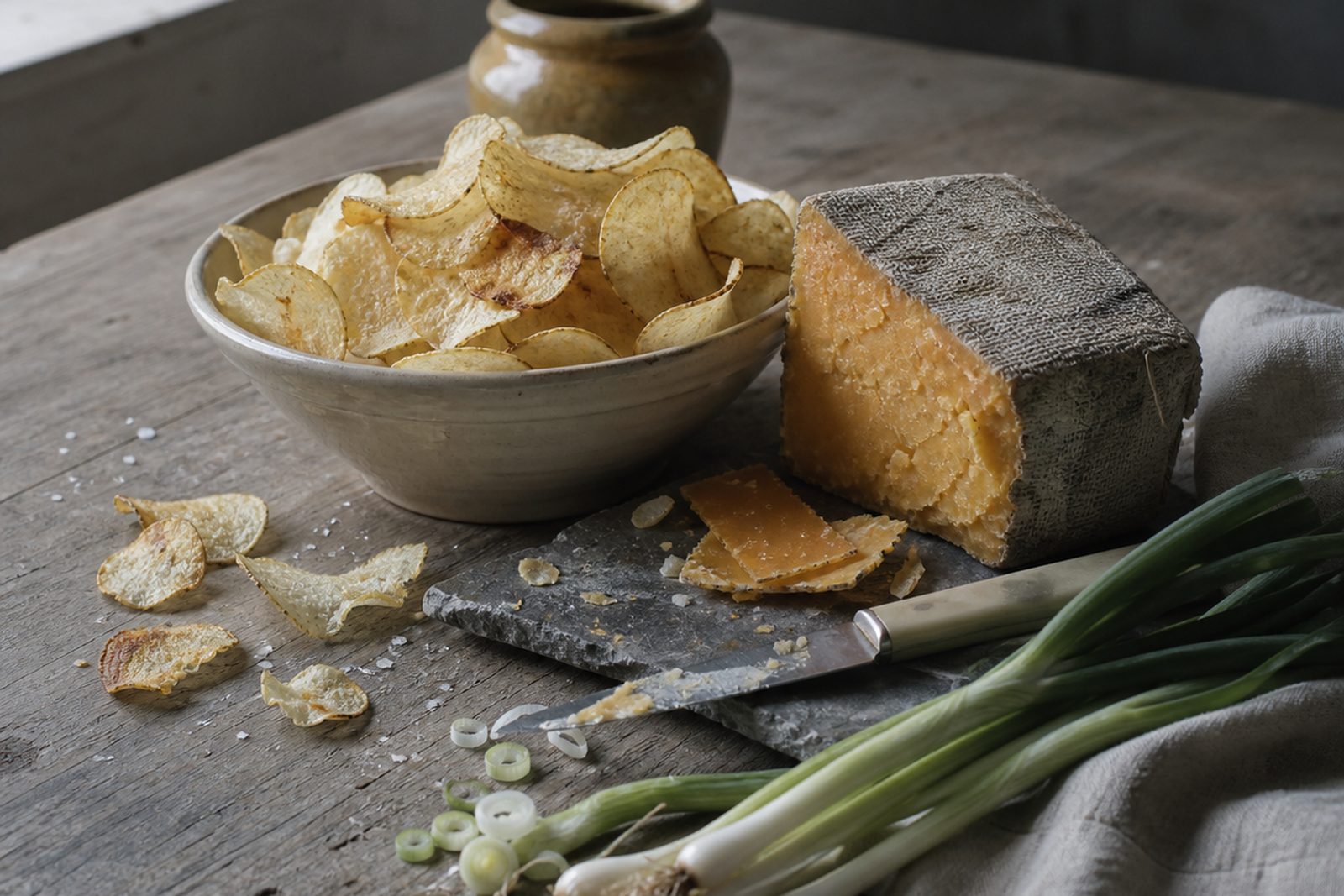 Cheddar Gorge, Somerset
Mature Cheddar & Spring Onion
Bought by the ton for Henry II in 1170, at a farthing a pound, and entered in the royal accounts.
Cheddar Gorge, Somerset
Mature Cheddar & Spring Onion
Bought by the ton for Henry II in 1170, at a farthing a pound, and entered in the royal accounts.
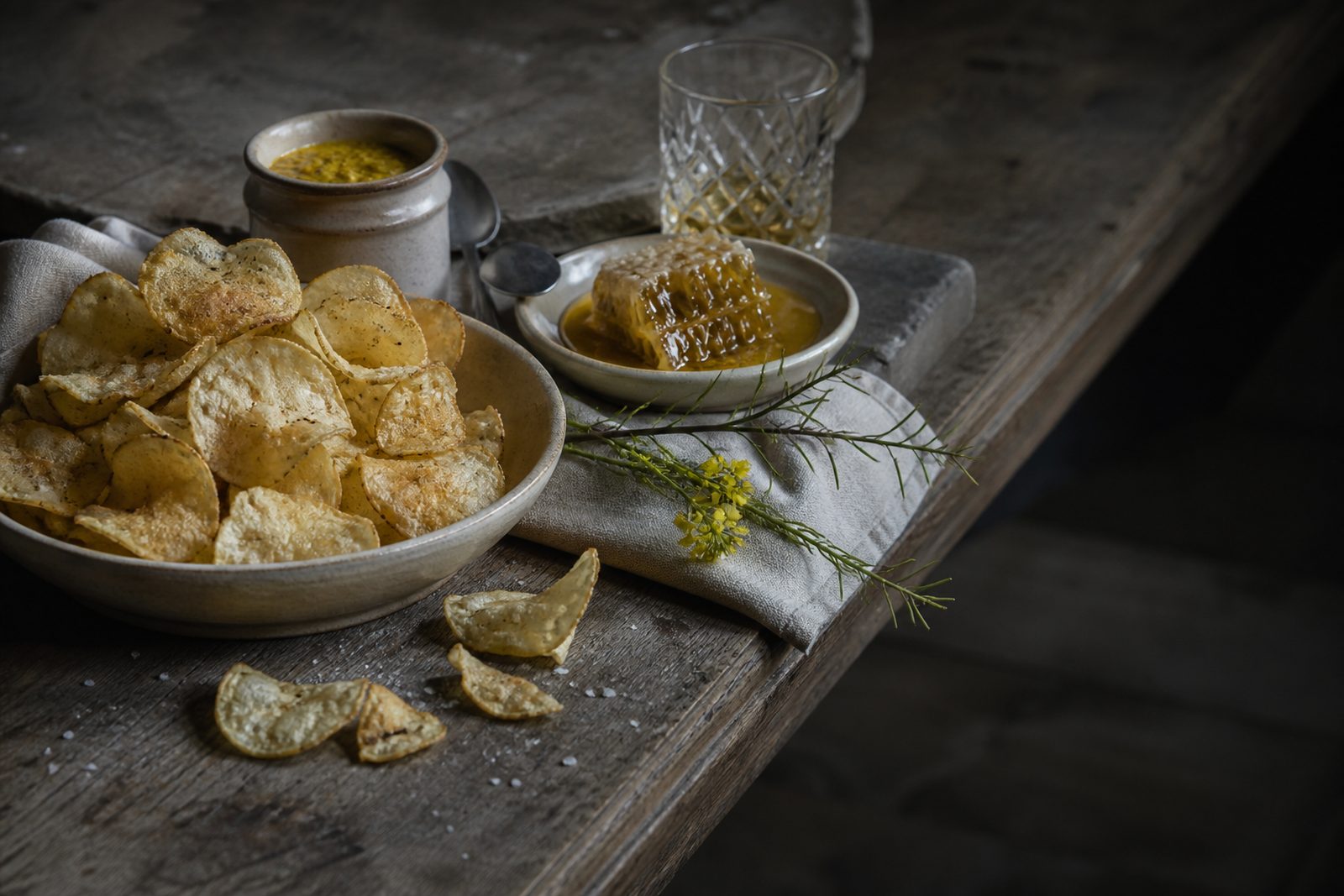 Norwich, Norfolk
English Mustard & Honey
Milled near Norwich since 1814, from the crop that turns whole Norfolk fields yellow in May.
Norwich, Norfolk
English Mustard & Honey
Milled near Norwich since 1814, from the crop that turns whole Norfolk fields yellow in May.
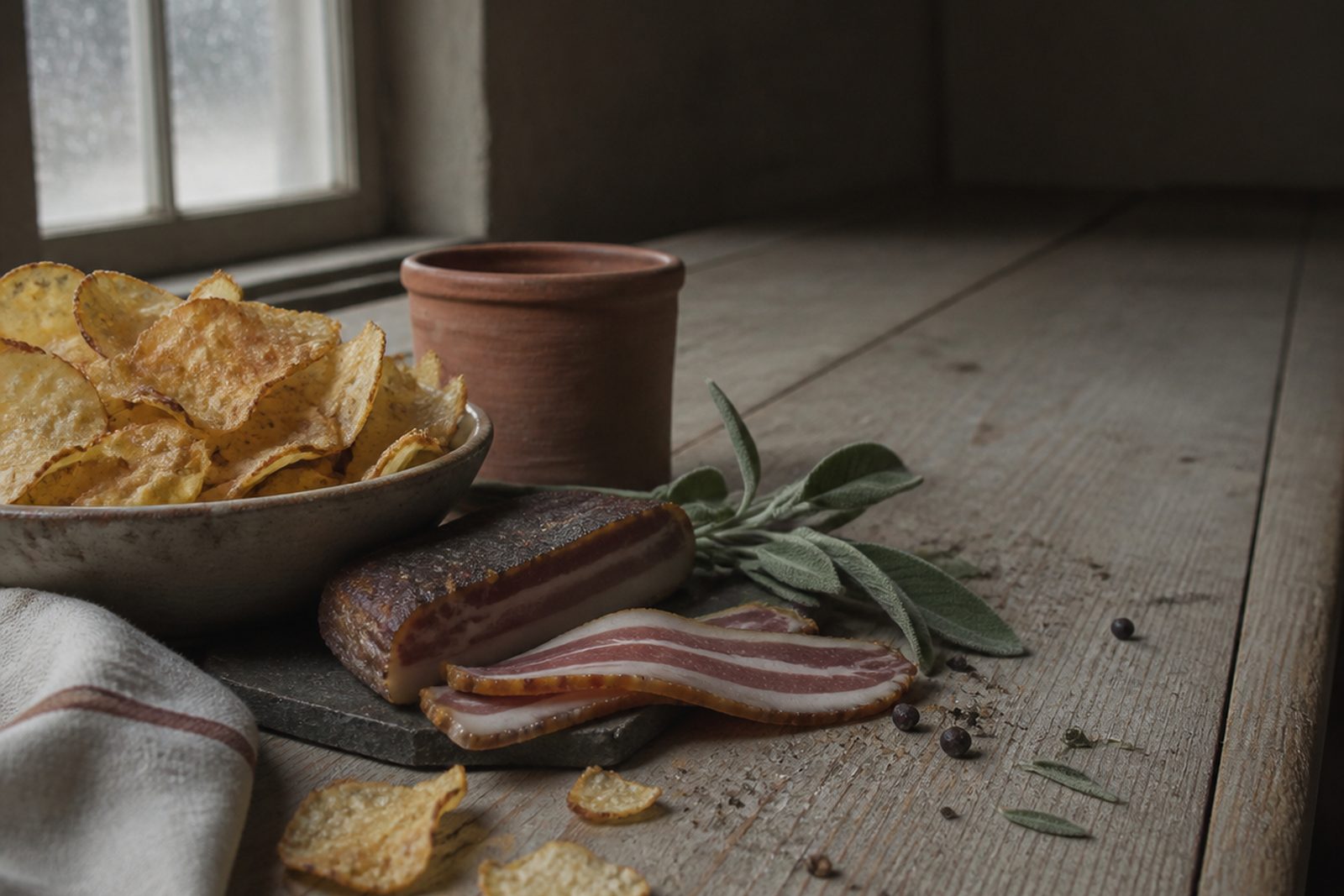 Calne, Wiltshire
Smoked Bacon & Sage
Droves of pigs walked the London road through Calne, and the town built its name on the mild Wiltshire cure.
Calne, Wiltshire
Smoked Bacon & Sage
Droves of pigs walked the London road through Calne, and the town built its name on the mild Wiltshire cure.
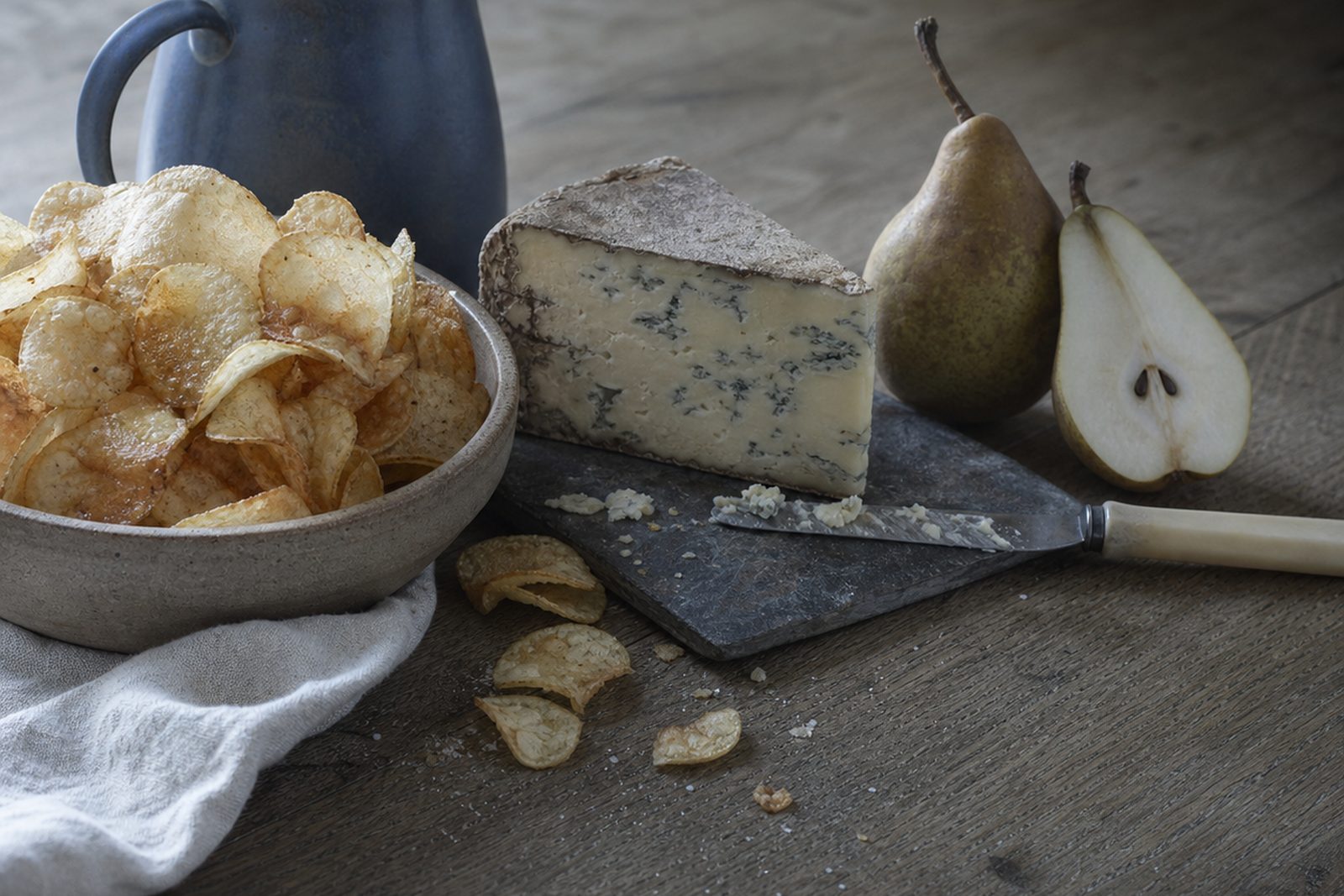 Melton Mowbray, Leicestershire
Blue Stilton & Pear
Named after a village now forbidden to make it, and made instead where it always was, in the Vale of Belvoir.
Melton Mowbray, Leicestershire
Blue Stilton & Pear
Named after a village now forbidden to make it, and made instead where it always was, in the Vale of Belvoir.
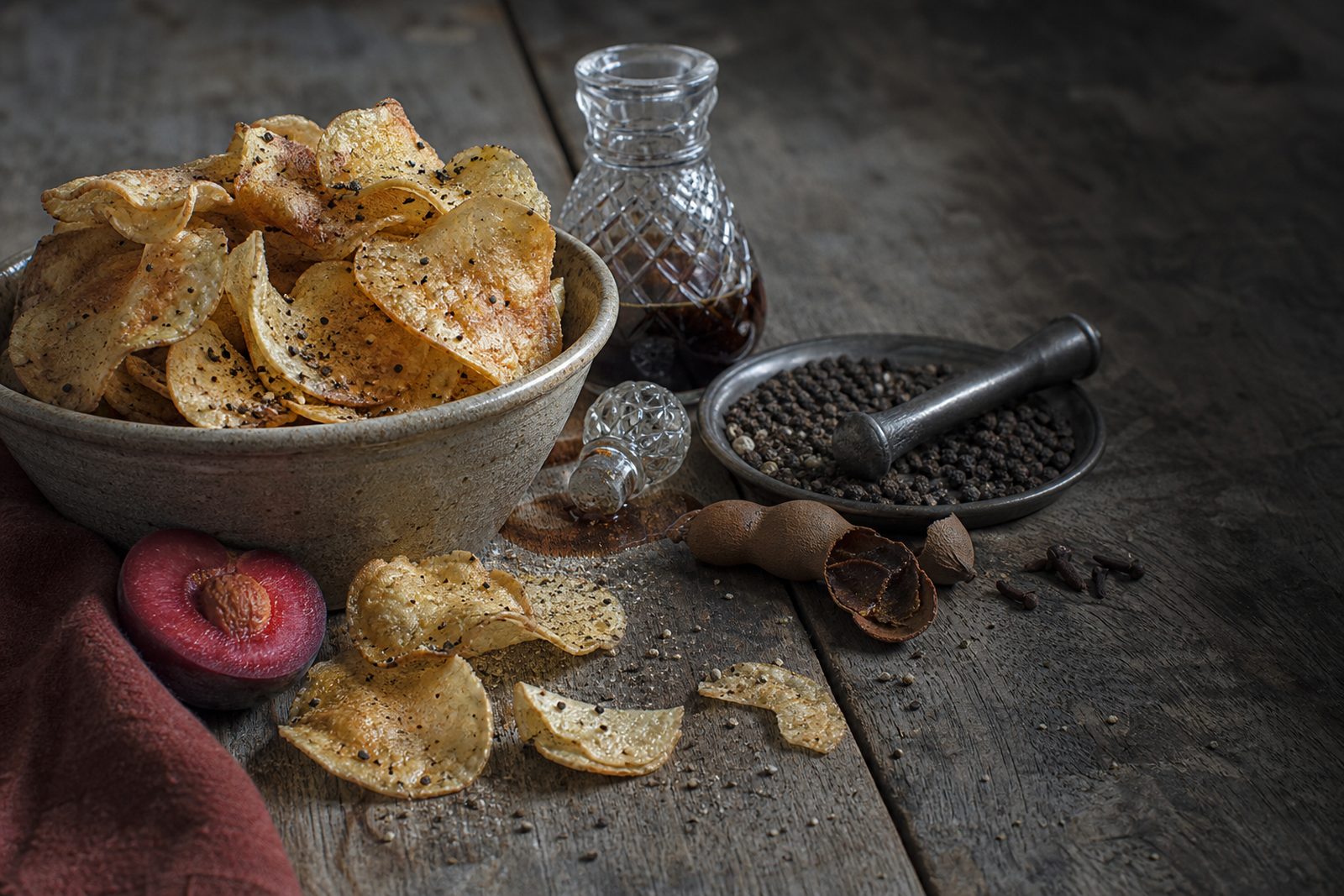 Worcester, Worcestershire
Worcestershire Sauce & Cracked Pepper
Put on sale by two Worcester chemists in 1837, and still left in barrel for months before anyone is allowed near it.
Worcester, Worcestershire
Worcestershire Sauce & Cracked Pepper
Put on sale by two Worcester chemists in 1837, and still left in barrel for months before anyone is allowed near it.
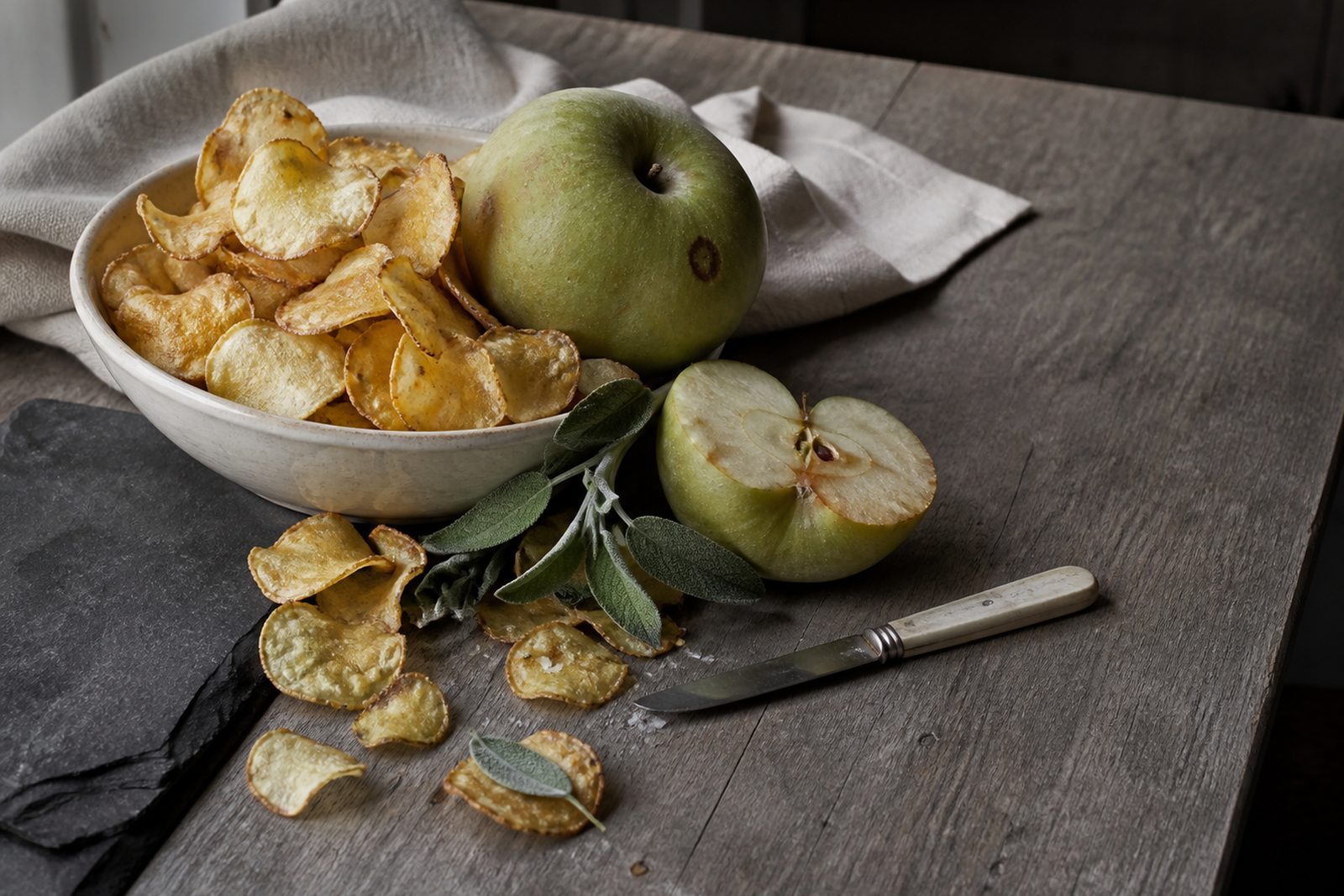 The Weald, Kent
Bramley Apple & Sage
England's cooking apple, grown across the orchards and oast-house country that got Kent called the Garden of England.
The Weald, Kent
Bramley Apple & Sage
England's cooking apple, grown across the orchards and oast-house country that got Kent called the Garden of England.
England, arranged by flavour
Eight places, from the Blackwater estuary in the east to the Wealden orchards in the south. The map is the argument: none of these flavours could have come from anywhere else, and most of them have not moved in several hundred years. Select a county to read what happened there.
Essex
Sea Salt & Cider Vinegar
Salt has been drawn from the Blackwater estuary since the Iron Age.
Read the county
Yorkshire
Malt Vinegar & Sea Salt
Barley malted for the brewers, then soured on purpose into vinegar.
Read the county
Somerset
Mature Cheddar & Spring Onion
Cheddar was bought for Henry II in 1170, at a farthing a pound.
Read the county
Leicestershire
Blue Stilton & Pear
Named for a village that is now forbidden to make it.
Read the county
Worcestershire
Worcestershire Sauce & Cracked Pepper
Put on sale by two Worcester chemists in 1837.
Read the county
Kent
Bramley Apple & Sage
The Weald is where England learned to grow apples at scale.
Read the county- Maldon, Essex Sea Salt & Cider Vinegar
- Yorkshire Malt Vinegar & Sea Salt
- Cheddar Gorge, Somerset Mature Cheddar & Spring Onion
- Norwich, Norfolk English Mustard & Honey
- Calne, Wiltshire Smoked Bacon & Sage
- Melton Mowbray, Leicestershire Blue Stilton & Pear
- Worcester, Worcestershire Worcestershire Sauce & Cracked Pepper
- The Weald, Kent Bramley Apple & Sage
Outline derived from Natural Earth 1:50m admin subunits, public domain. Coastline only; no county borders are drawn.
There is nothing to buy here.
Posh Crisps is a fictional brand. It was invented, written, designed and built by AI agents as a demonstration by TermRoam. There is no company, no factory, no product, no mailing list and no order to place. Below is the shape a signup box would take on a site like this one. It is switched off, and it is staying that way.
This field is disabled
Nothing you type here goes anywhere, because this is not connected to anything.
The English history on this site is real and sourced. The brand around it is not. Read how it was made →