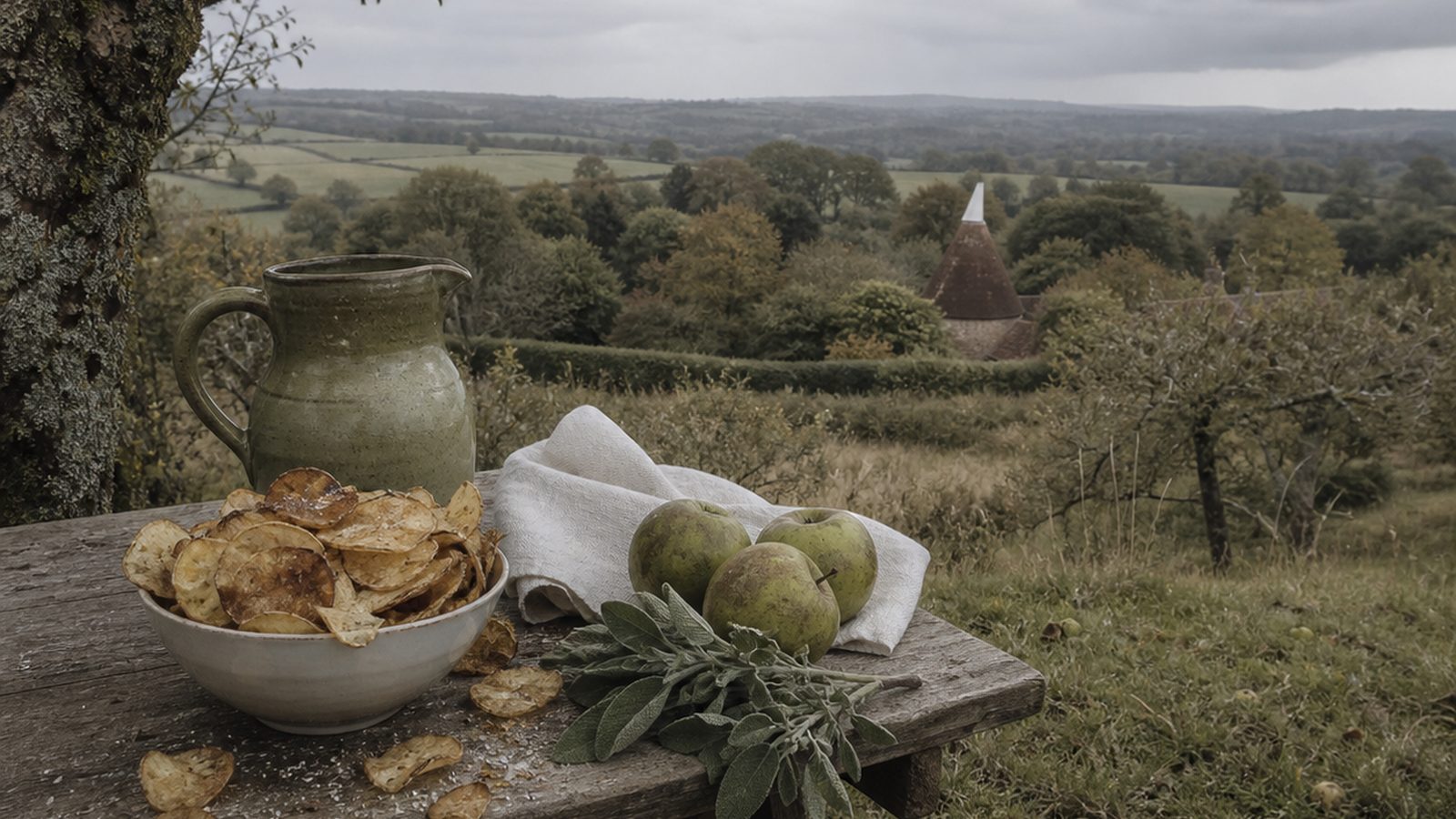
The apple is not Kentish.
A pip went into the ground in a cottage garden at Southwell, Nottinghamshire, between 1809 and 1813. Mary Ann Brailsford planted it. She married, left the house, and died in 1852 without learning what she had grown.
Matthew Bramley, a butcher, bought the cottage and the tree in 1846. In 1856 a Southwell nurseryman, Henry Merryweather, asked permission to take cuttings; Bramley agreed on the condition that the apples carry his name, and they have carried it since. The first recorded sale was on 31 October 1862: three apples, two shillings.
The Royal Horticultural Society's Fruit Committee highly commended it on 6 December 1876, and it took a First Class Certificate in 1893. The first commercial orchard went in at Maythorne, near Nottingham, in 1910. Every Bramley in the world is a graft taken from that one seedling.
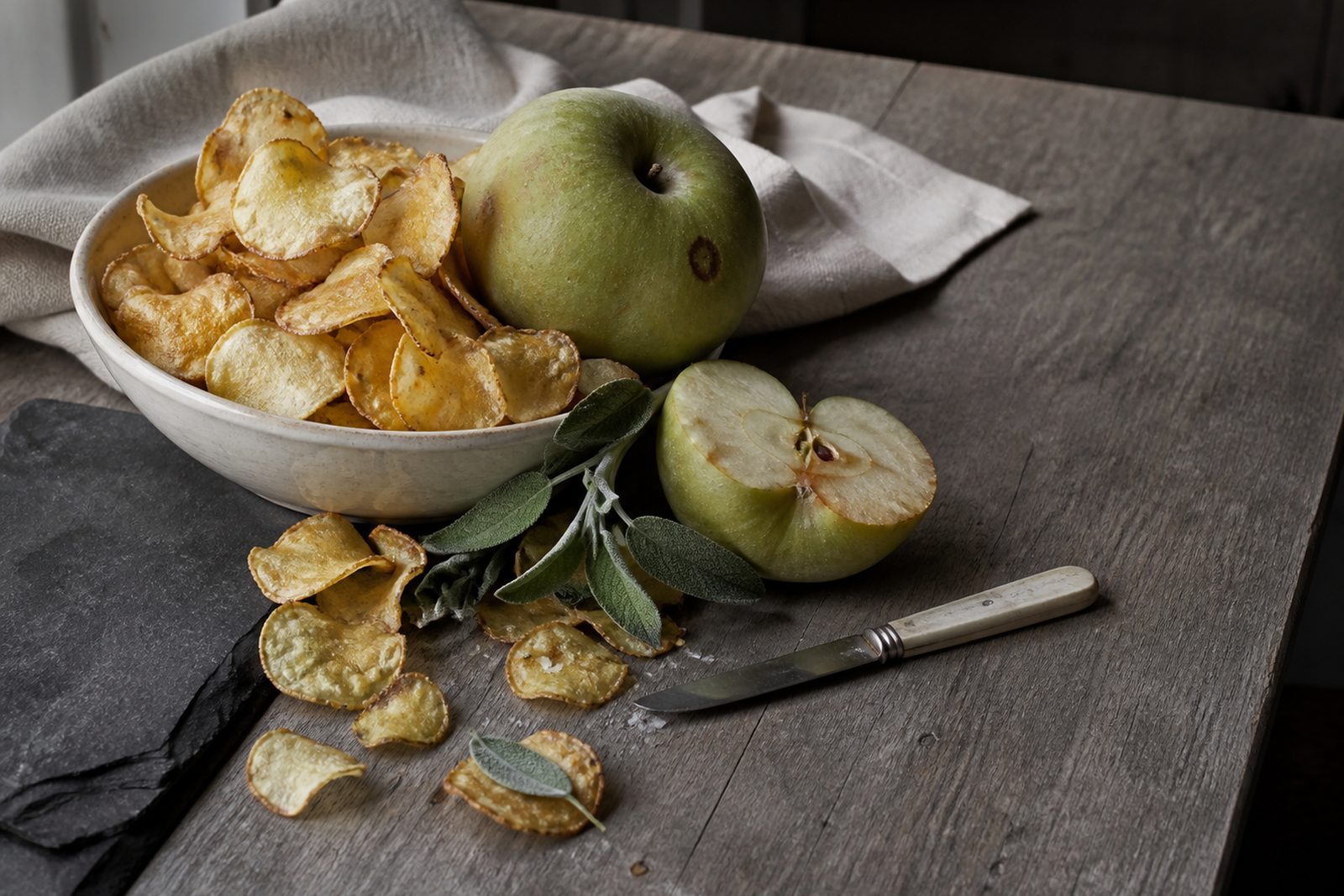
Teynham, the parent of all the rest.
About the year 1533, Richard Harris, fruiterer to Henry VIII, obtained 105 acres of good ground at Teynham, then called the Brennet, and divided it into ten parcels. He brought plants from beyond the seas and set out the sweet cherry, the temperate pippin and the golden renate.
William Lambarde, writing his Perambulation of Kent in 1570, found the rows still standing so straight that the trees seemed to be of one sort, shape and fashion, and called Teynham the parent of all the rest. He did not call it England's first orchard, and neither will we: he notes in the same passage that older stock brought from Normandy had lost its native verdour.
What Teynham was, on Lambarde's evidence, is an early and unusually deliberate piece of English fruit growing at scale: chosen stock, brought in, set out to a plan. Lambarde named the thirty-odd parishes around it the Cherrie gardein, and Apple orcharde of Kent.
The Bramley was raised from a pip in Nottinghamshire. Kent is where England learned to plant fruit in straight lines and sell it.
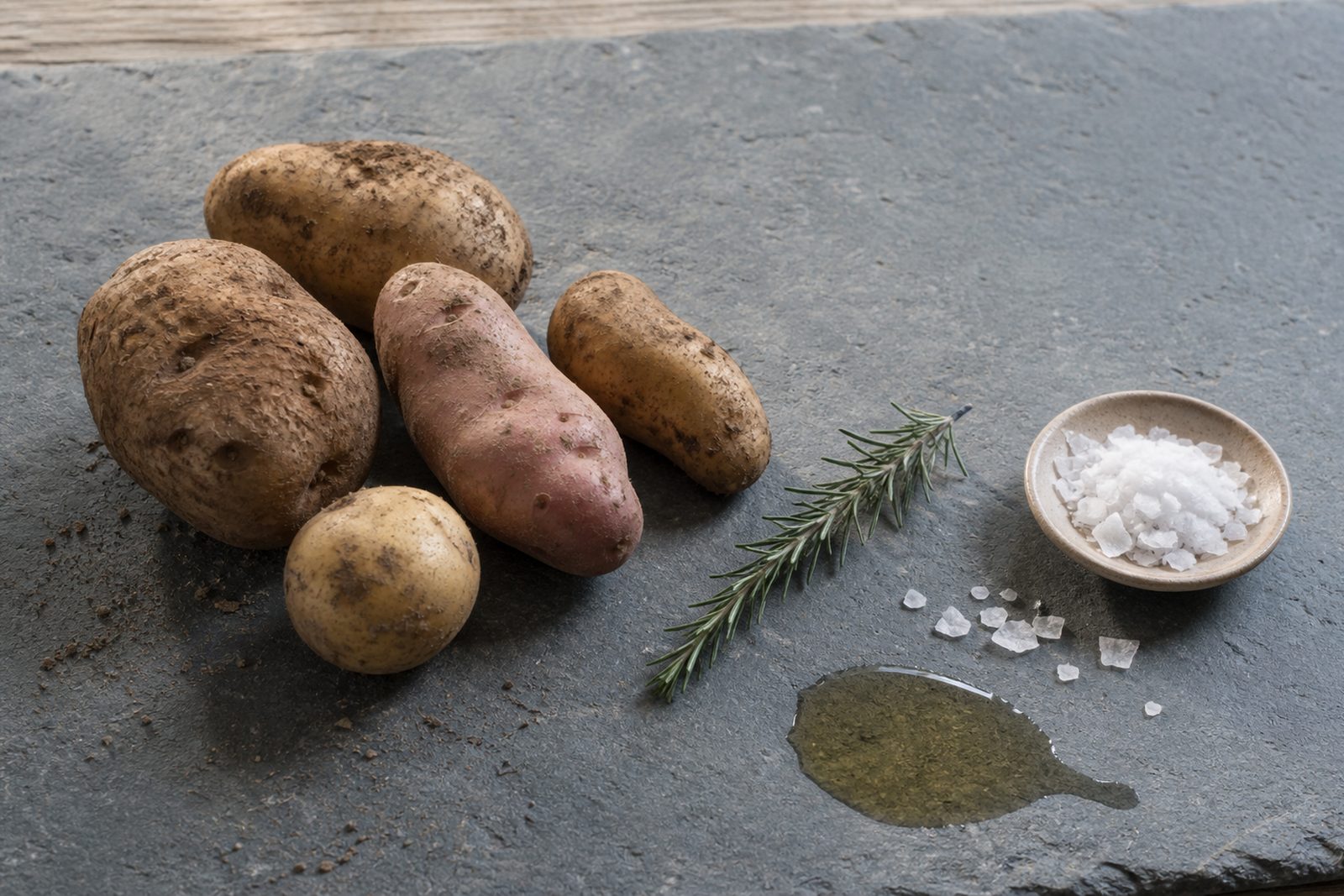
Clay, greensand, brickearth.
The Weald is the eroded core of a dome. Take the chalk cap off an anticline and you are left with sandstone ridges at the centre and clay vales round the rim, the North and South Downs standing up as the broken edges. Weald Clay runs up to 460 metres thick and is close to impermeable: winter-wet, heavy, and mainly pastoral.
Orchards largely keep off it. Kent's fruit sits on the ground either side — the Wealden Greensand, where springs break out along the junction of sand and clay, and the brickearth over chalk of the North Kent Plain.
The protected designation for East Kent Goldings describes that northern ground in writing: brick earth over chalk, an ideal pH of 6.5 to 7.0, an average of around 635 mm of rain a year, and cold salt-laden winds off the Thames estuary, particularly in March. That document is about hops rather than apples, which is the point. Hops shaped this county as thoroughly as fruit did, and the oast houses built to dry them are what most people picture when they picture Kent.
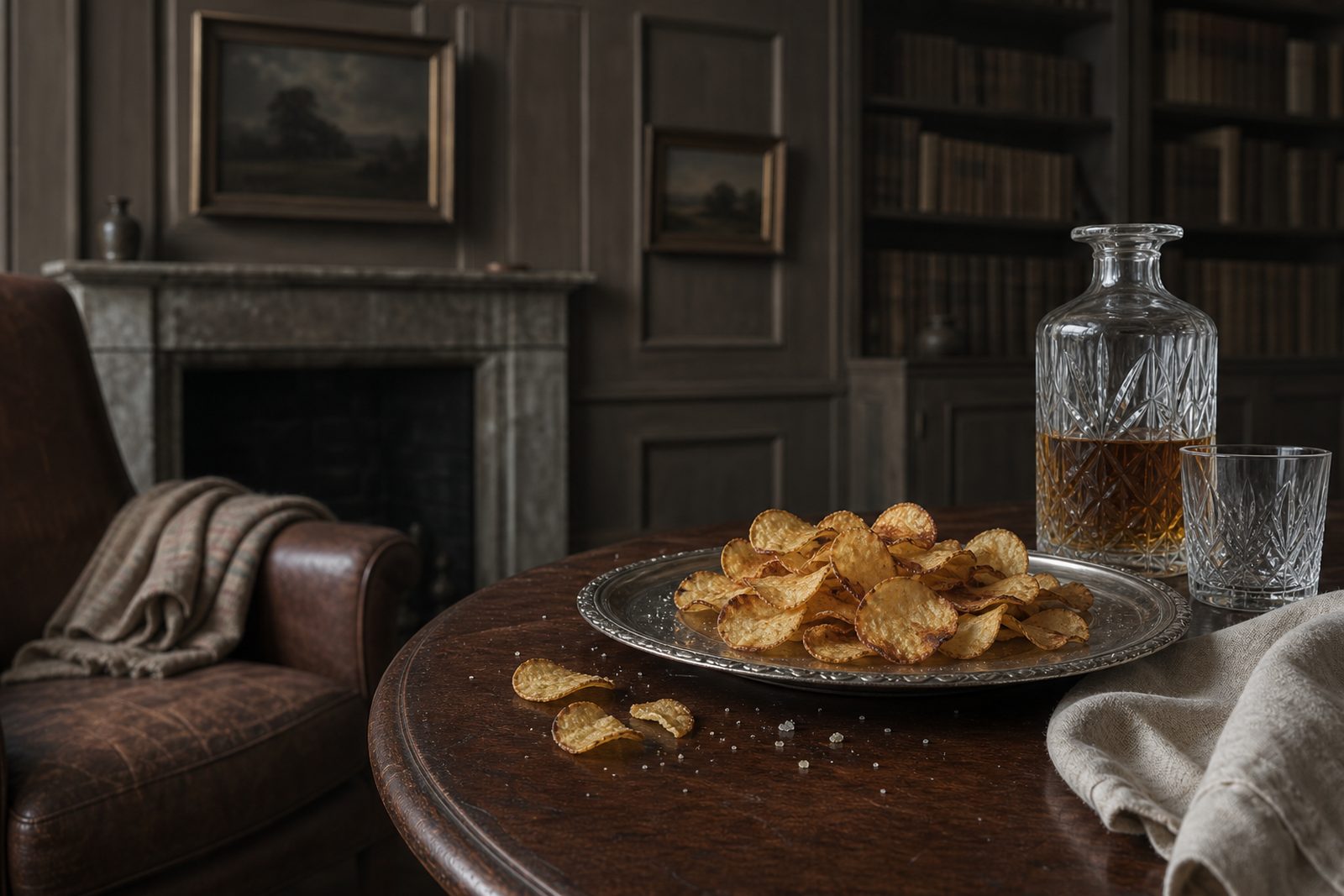
The oldest pairing in the book.
Sage is Mediterranean. It arrived with the Romans or with monastic gardeners; the record does not settle which. Its species name, officinalis, refers to the officina, the storeroom where a monastery kept its herbs and medicines.
The separate halves of the pairing are old. The Forme of Cury, compiled by Richard II's cooks around 1390, gives Appulmoy — apples boiled and drawn through a strainer, then thickened with almond milk, honey and rice flour — and Pygges in Sawse Sawge, cold pork under a green sauce of parsley and sage.
Apple and sage meet in one dish at the marriage of Roger Rockley and Elizabeth Nevile on 14 January 1526, where the second course closed with apples and cheese strewed with sugar and sage. Hannah Glasse fixed the modern arrangement in print in 1747, giving a pork knuckle stuffed with onions and sage, with gravy and apple sauce to it. Bramley arrived nearly three centuries after that Tudor table and simply won: low dry matter, high malic acid, low sugar, so it collapses to purée and holds its edge through the oven.