The road, not the land.
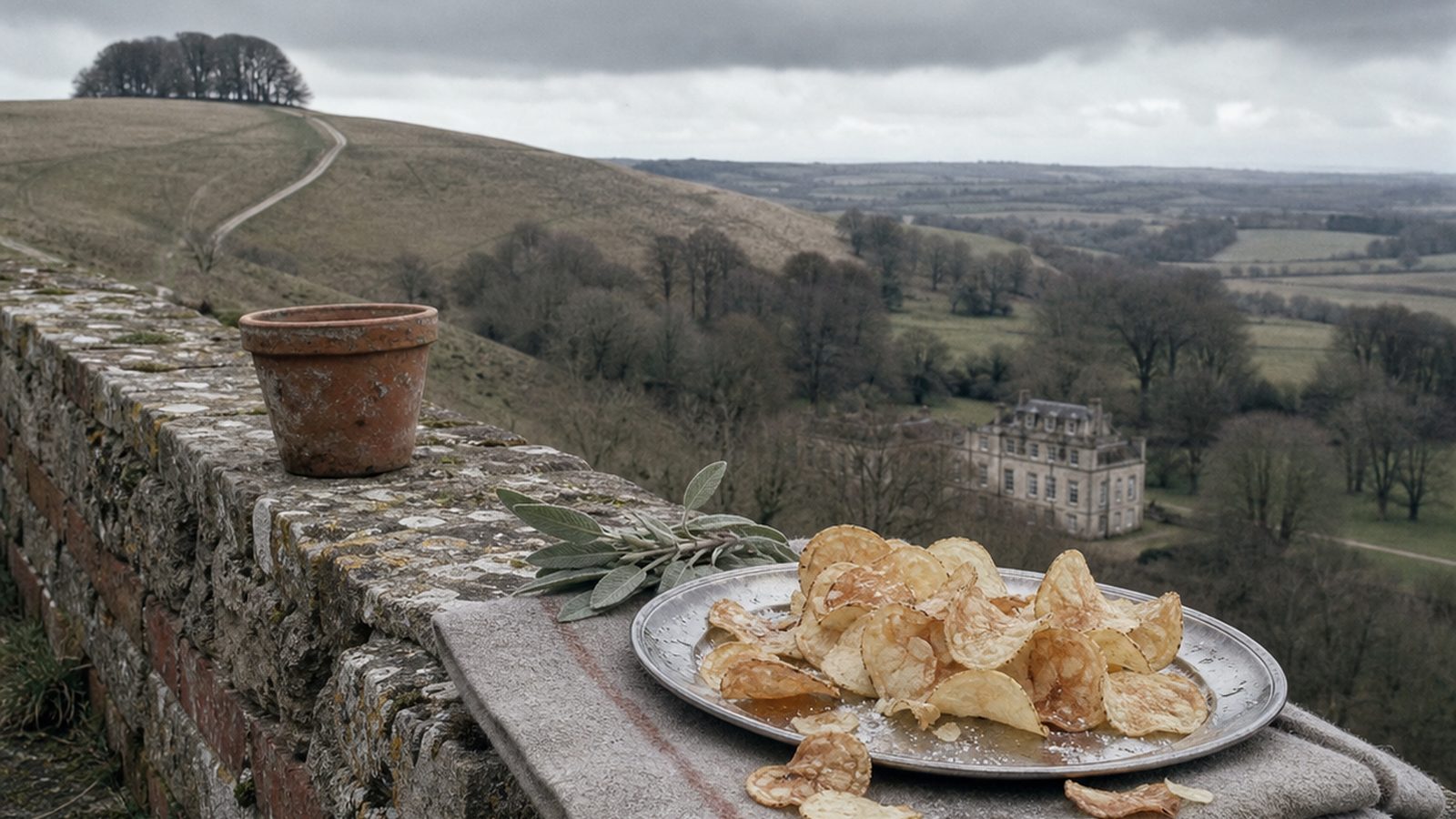
Two-thirds of Wiltshire lies on chalk, and chalk is sheep country. Calne is not on it. The town sits at the western edge of the Marlborough Downs, where the scarp runs north-east and south-west, and the ground below it is greensand, gault and clay. The Marden rises under the scarp and runs north-westwards through the town.
The pigs did not come off the downs. They came off dairies, because north Wiltshire made cheese and butter and whey fattens a pig; Defoe, touring the island, put the county's bacon down to the whey and skimmed milk the farmers had to spare. In the years that built the trade they came off the road.
Irish pigs were landed at Bristol and walked to Smithfield on the hoof, resting on the way so they arrived in condition, and one of the regular resting-places was just outside Calne. Exports of Irish pork to England rose eightfold between 1770 and 1800, more than sixty per cent of it going to London. By 1887 the Calne works drew pigs from twenty-five counties in England and Wales, and still took a great many from Ireland. This is the taste of a position, not a soil.
Five or six pigs in a good week.
John Harris kept a pork butcher's shop in Calne in the late eighteenth century. He died in 1791, and his widow carried on at a scale worth stating exactly: a good week was one in which she killed five or six pigs. That was the whole of it.
The constraint was heat. Bacon could be cured only in cold weather, so a curer worked half the year and salted hard enough to get the meat through the other half. Then the supply broke. The railways ended the road droves, and the failure of the Irish potato crop finished the job; by 1847 there were not enough animals walking through the town.
George Harris sailed to America to see how curing was done there and spent a year among its bacon curers. The works he opened at Schenectady, New York, in 1848 failed. He came home with the one thing that mattered, which was that they were using ice.
Calne did not raise the pigs. It stood on the road they walked down, and worked out how to keep them cold.
Cold, not smoke.
The first ice-house went into the High Street factory in 1856. Ice was stored on iron floors in chambers above the curing rooms, with charcoal packed into the walls around them, so the cold fell through the building. Curing became a year-round trade, and the salt could come down. That is what the Wiltshire cure was in its original dry-cured form: ten to fourteen days in salt, low, and comparatively sweet.
Since the First World War it has usually been a wet cure, four or five days in brine. Either way the mildness is a by-product of refrigeration. Thomas Harris patented the ice-house in 1864 and curers across the country built it under licence; when English winters ran warm, Calne bought ice from Norway.
Mechanical refrigeration followed from 1885, and brine plant replaced the ice-houses around the time the two family firms amalgamated in 1888. Smoking is not part of the cure. Calne had its own smoke rooms, but the bacon was frequently sold green, which is the trade's word for unsmoked. Smoke is a finish, applied afterwards over oak or beech, and it is a finish this flavour takes.
Sage, and what is left.
Sage is not English. It is a Mediterranean plant, and it arrived here either with the Romans or with monastic gardeners in the Middle Ages; the record does not settle which. Charlemagne listed it among the plants to be grown on the imperial estates, and a ninth-century monk, Walafrid Strabo, wrote it into his poem on gardens. It is in European cooking by the fourteenth century, in the cold sage sauces of English, French and Lombard kitchens.
England fixed it as sage and onion, and the word stuffing is attested from 1538. Lincolnshire sausage and Sage Derby are the same instinct. Sage has outlasted the industry it seasoned.
At its height the Calne works took five thousand pigs a week and employed two thousand people. In February 1980 four hundred and fifty jobs went in a single round of redundancies, and four hundred and fifty were left. The factory closed in 1982 and was demolished over the two years that followed. A bronze of two pigs, put up by the town's civic society in 1979 while the works were still running, stands in the town centre.