The lease, the mill and the fifty-one pounds.
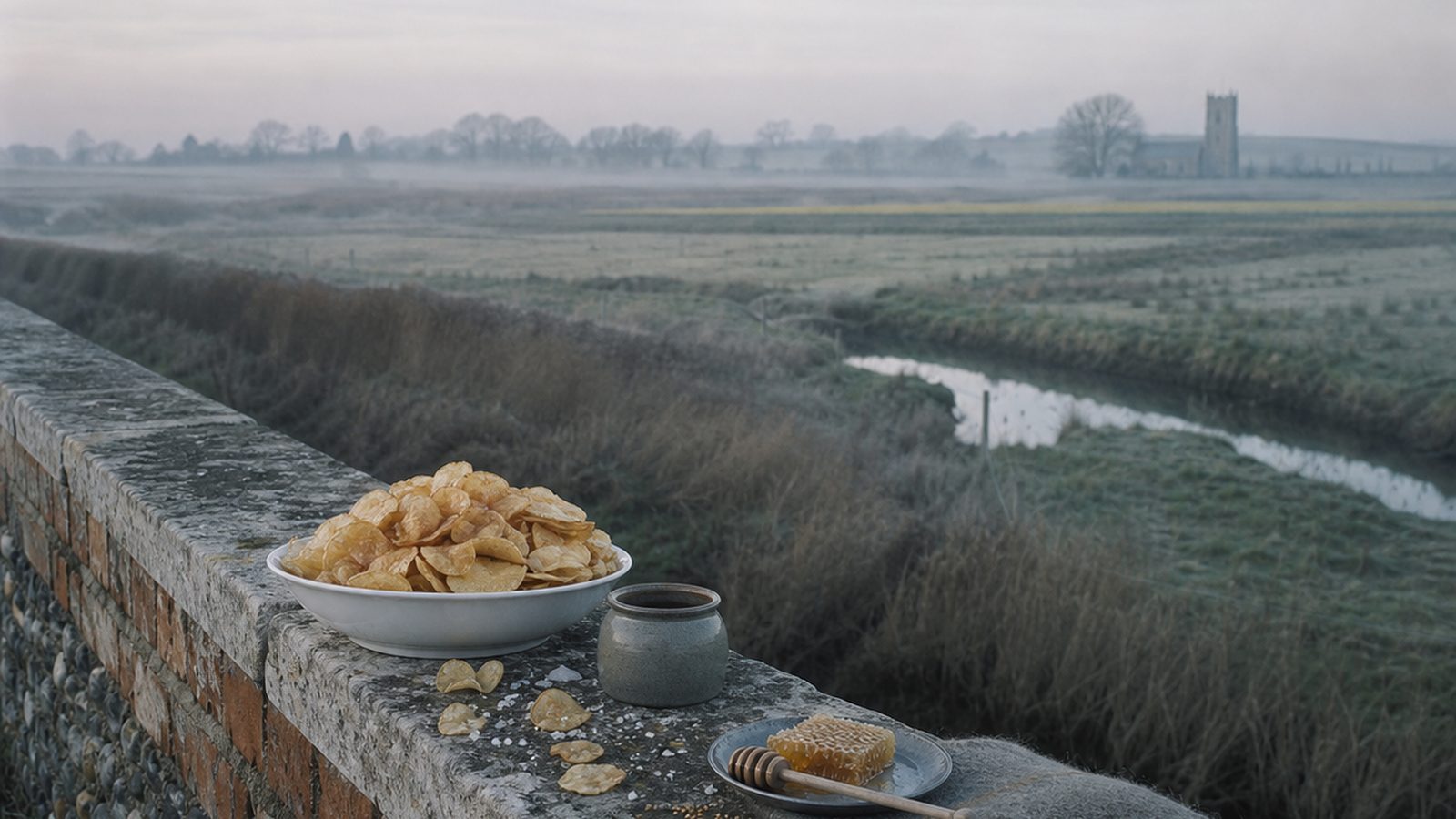
On 3 April 1814 Jeremiah Colman, a Norfolk miller, took a twenty-one-year lease on the watermill at Stoke Holy Cross, on the River Tas. He paid Edward Ames £51 2s 0d for the stock of mustard already standing there.
The mill had passed to the Ames family in 1795 and turned from paper to mustard at some point in the two decades that followed; five papermakers were still listed as working there in 1801. Colman advertised in the Norfolk Chronicle on 30 April and again on 7 May: having taken the stock and trade lately carried on by Mr Edward Ames, he would continue the manufacturing of mustard. The address matters, and it is not the one usually given.
Stoke Holy Cross is four miles south of Norwich, on a small river, in a building that had made paper. Mustard milling did not reach the city itself for another forty years.
Norwich did not invent it.
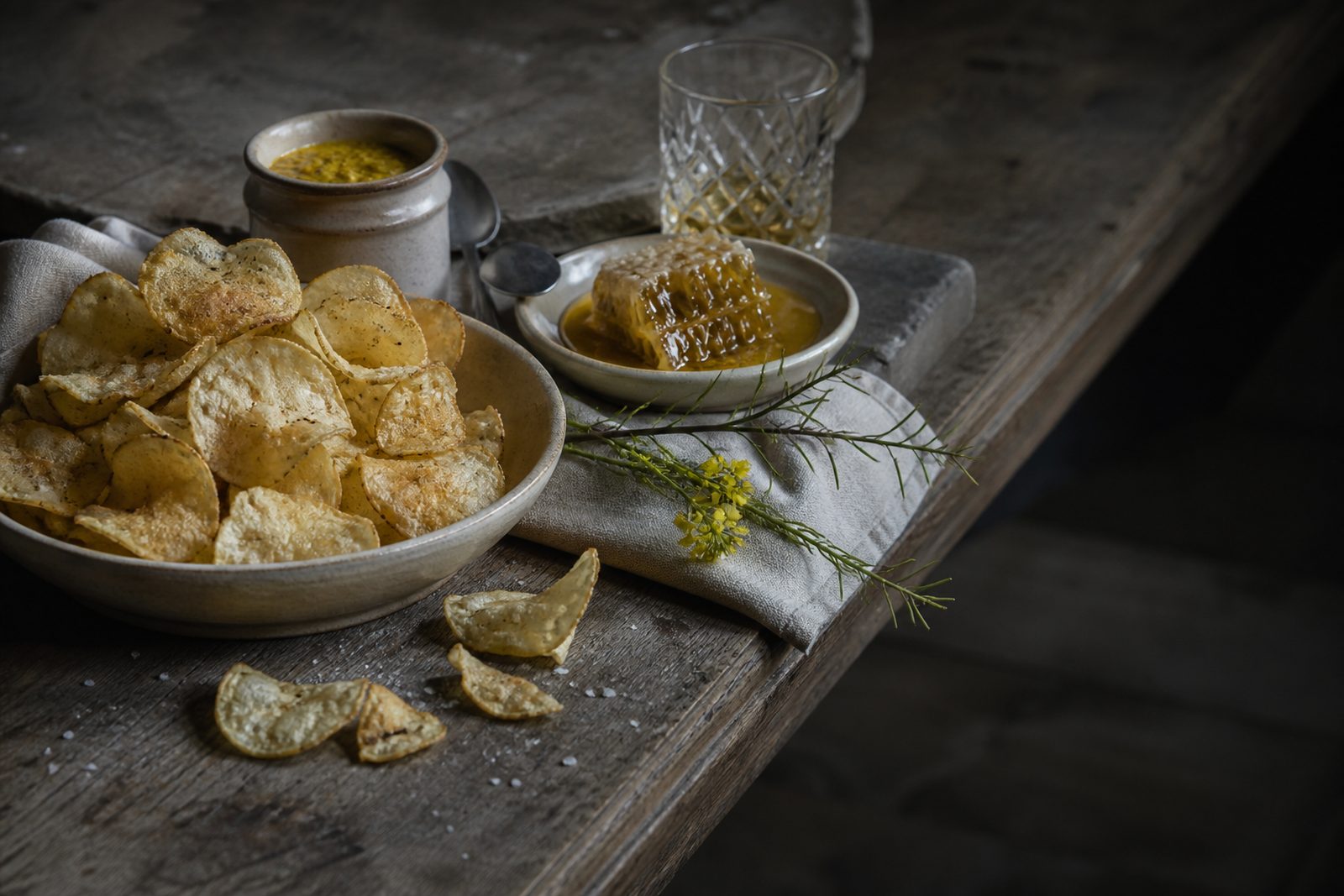
Norwich inherited English mustard rather than invented it. Mustard balls appear in The Forme of Cury, compiled about 1390 by the master cooks of Richard II: seed ground coarse with flour and cinnamon, moistened, rolled and dried hard.
Tewkesbury made the same article with grated horseradish and sold it dry, for the buyer to slake at home in vinegar, wine or ale. Shakespeare has a man's wit described as thick as Tewkesbury mustard, in Henry IV Part 2. The fine milled powder came later, from Durham around 1720, where the story goes that a Mrs Clements applied flour-milling technique to the seed and made a London fashion of it.
That is tradition rather than record; even her name is given variously, and her first name is not securely known. What happened at Stoke Holy Cross was the industrialisation of a technique already ninety years old, applied to a condiment already four hundred.
Mustard is a place. This one is four miles south of Norwich.
The honey was always there.
Honey in mustard is not a modern softening. De re coquinaria, the Roman recipe collection known as Apicius, glazes roast boar with ground mustard, pepper, herbs, vinegar, fish sauce and honey. Centuries later the Tewkesbury balls were being slaked at home with vinegar, wine or ale, often with a sweetener added, and honey was the sweetener most households had.
Before cheap sugar there was little else. Bees were kept for wax as much as for the honey, and both were accepted in payment of tithes and rents.
Skeps were sheltered in bee boles, alcoves cut into a south- or east-facing wall to catch the morning sun, the oldest of which may be twelfth century. Norwich had fifty-eight parish churches inside its medieval walls, thirty-one of which still stand. Before the Reformation their candles were beeswax.
Carrow, and two ways out.
The trade reached Norwich in the 1850s, at Carrow on the River Wensum: land bought from the Norfolk Railway Company in 1850, a mustard mill built between 1854 and 1856, forty acres beside the water. The transfer took years — begun in 1856, complete by 1860, with the old mill at Stoke Holy Cross given up in 1862. The site was chosen for its two exits.
The Wensum runs to the Yare, the Yare to Breydon Water and Great Yarmouth and the sea; the railway ran the other way, into the rest of England. More than two thousand people worked at Carrow by 1893, and 2,300 by 1909.
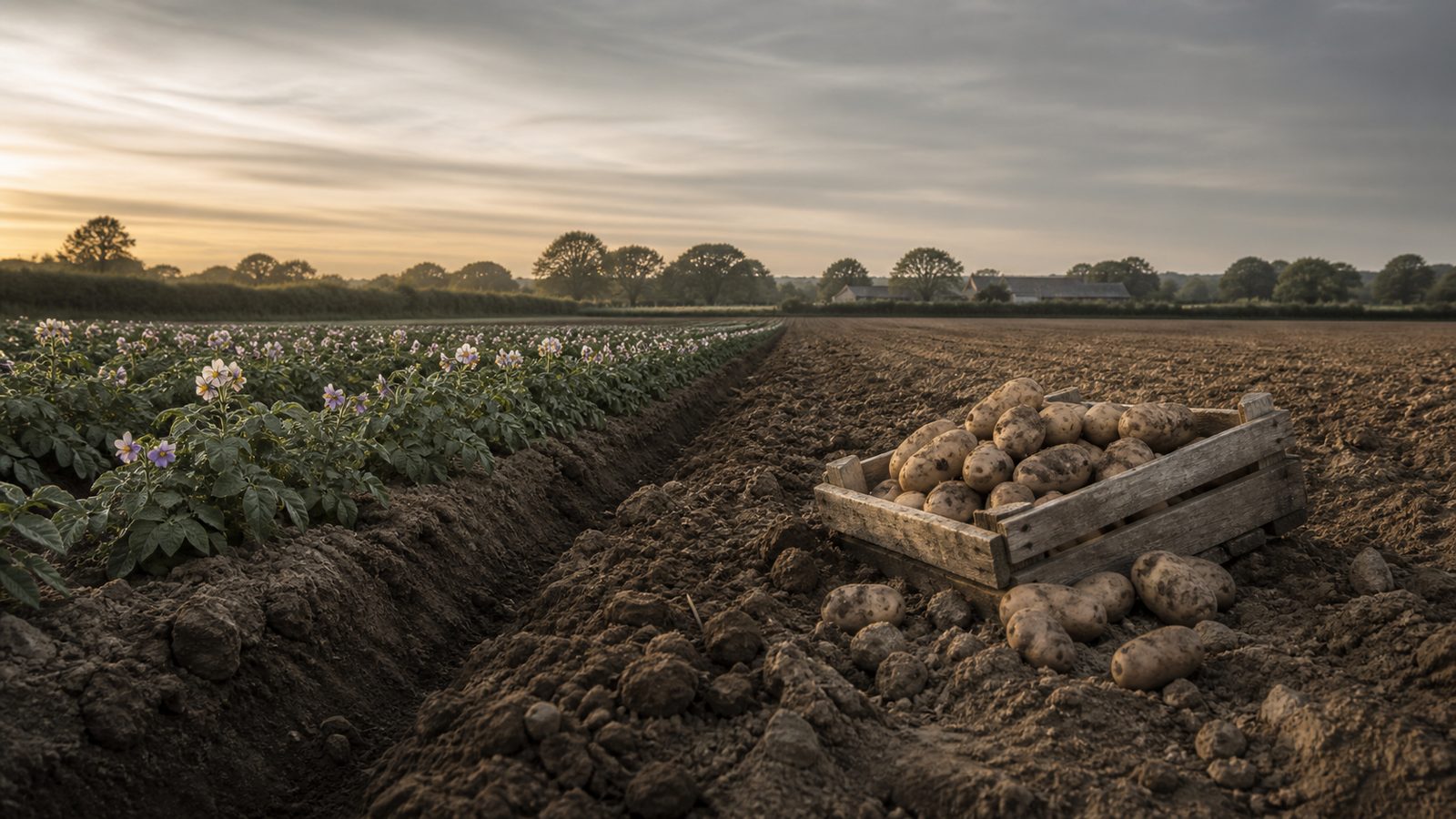
The seed was never only Norfolk's. Condiment mustard is grown across Cambridgeshire, southern Lincolnshire and Norfolk, sown in spring and cut towards the end of August, on some of the driest arable land in England. The last jars of mustard were filled at Carrow on 24 July 2019.